

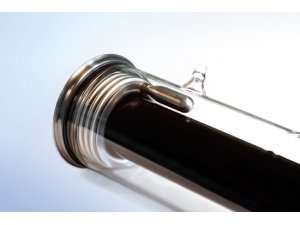
The Italian power company Enel will install molten salt receivers with technology from SCHOTT when modernizing certain parts of Archimede CSP plant, the world's largest molten salt solar power plant.
These are bad news for Archimede Solar Energy (ASE), so far, the only company to supply tubes to be used with molten salt. In fact, Enel wil replace the currently installed tubes then supplied by ASE. ASE was the first company to manufacture tubes for molten salt with technology developed by Italian research center ENEA.
Schott moves ahead in the molten salt tubes sector to be well positioned for future parabolic trough molten salt plants.
Schott has supplied around 450 so-called “High Temperature Molten Salt Receivers” for use in the Archimede solar power plant in Sicily this summer. With a capacity of approximately 5 MW, the Archimede project is currently the largest CSP plant that operates on the basis of parabolic trough with molten salt technology. Moreover, ENEL and SCHOTT are working together on the EU project ARCHETYPE aimed at building a commercial 30 MW parabolic trough power plant that also employs molten salt technology.
The uniqueness of molten salt technology is that molten salt is used as a heat carrier in the solar area of the power plant. In the past, receivers have used solar radiation to heat up thermal oil to a maximum temperature of 400°C. But with molten salt as the heat carrier, operating temperatures of up to 550°C are now possible. This means the power plant can be operated even more efficiently and generate electricity at a much lower cost.
Due to the high operating temperatures, these types of plants pose new challenges for the components used in the power plant. First and foremost, as the core components of the solar field, the receivers must be designed to stand up to these extreme operating conditions. In this case, a special type of steel had to be developed in cooperation with leading companies in the steel industry and then be qualified before being put to commercial use.
Dr. Nikolaus Benz, the Managing Director of SCHOTT Solar CSP GmbH responsible for Development, Quality and Manufacturing, adds: “The success of molten salt technology represents an important milestone in increasing the efficiency of CSP power plants and achieving a sustained reduction in the costs of generating electricity with these power plants. We at SCHOTT are pleased to be able to make an important contribution to the future success of CSP technology by developing these special receivers.”
The Archimede project went into operation in the summer of 2010 and extends an existing combined gas-steam power plant through its capacities. The solar part of the plant generates 5 MW of power, enough to supply 4,500 households with electricity. In addition, the molten hot salt can be stored directly in large intermediate storage tanks and then be used to generate electricity even during cloudy weather and at night.
 Printer-friendly version
Related news
