

Heliostats can be useful for many other purposes other than Concentrated Solar Power, such as reflecting the sunlight to simply lighten a dark area. So far, I have seen some homemade devices to reflect sunlight to a regularly dark side of a house, but not to lighten a whole town's square.
The Norwegian town of Rjukan is a shaddy place surrounded by mountains that block the direct sunlight especially during winter. Taking a look at Google Earth you'll see it's located in a narrow valley and you will make an idea of how shaddy it is.
The idea to bring light to the valley is not new as more than 100 years ago, businessman Samuel Eyde, who established Norsk Hydro in 1905, had the idea of bringing sunlight into the valley. His attempts failed mainly due to a lack of technology available at that time. Instead, Norsk Hydro built the Krossobanen, the first aerial tramway in Northern Europe, in 1928, allowing employees to spend a few sunny hours in the mountains during the winter.
Local artist, Martin Andersen returned to the idea of a heliostat ten years ago in an artistic project entitled "How to lighten up the shadows in the valley". A first contactor failed to meet the requirements for such a project, but, finally, Bilfinger Industrial Services Norway and Solar Tower Systems commenced work on the project in summer 2012.
The heliostats are to go into operation in a special ceremony to be held on 31 October 2013
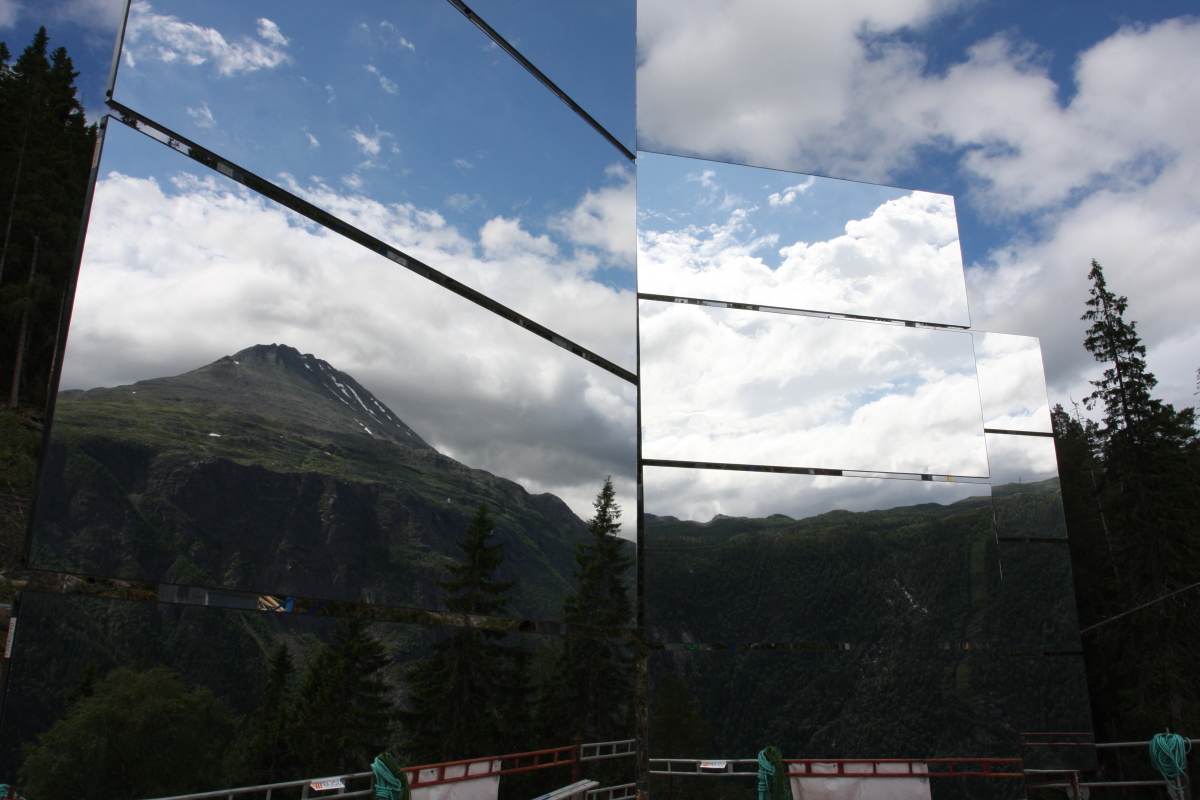
At a distance of around 850 metres above the town, the Bilfinger team of experts found the right place which receives direct sunlight throughout the entire winter and is in a direct line of sight to the market square. Three overlapping mirrors each measuring 17 square metres have been installed to compensate for scattering in the reflected light. They follow the course of the sun on a computer-aided basis, reflecting 80 percent of its direct light onto an area of 200 - 250 square metres at the market square.
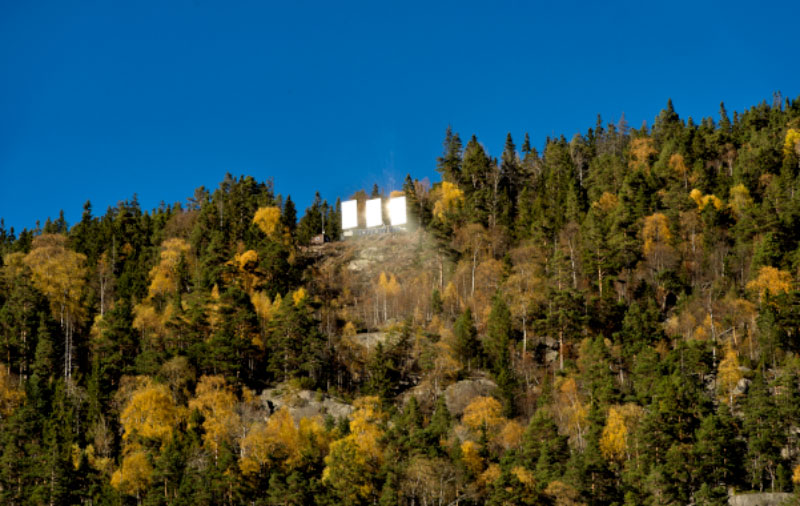
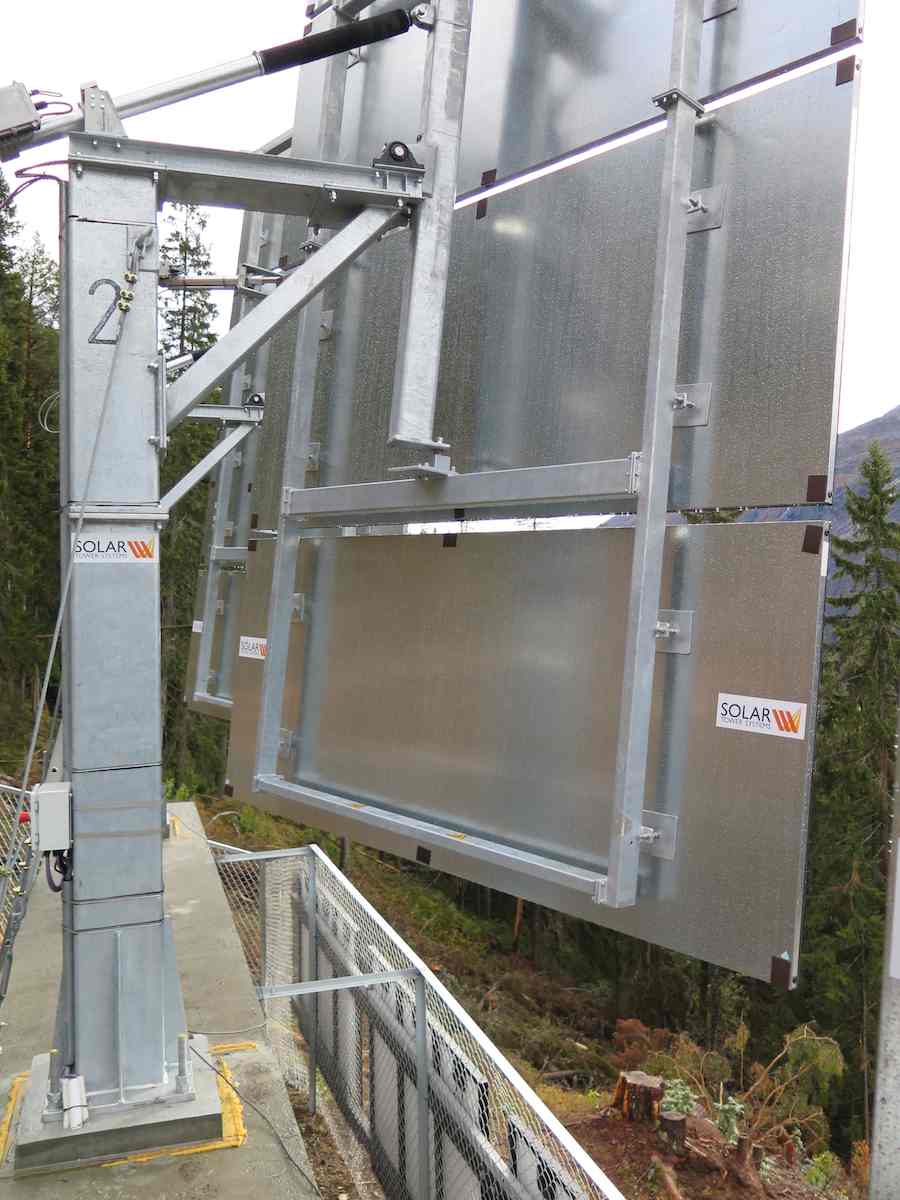
These mirrors have been specially designed for the cold, snowy and windy Norwegian winter. Like heliostats in CSP plants, these can move on horizontal and vertical axis, allowing them to be placed in a night-time mode to reduce the amount of snow on the surface of the mirror. As well as this, there is a special mechanism to protect them from strong winds. The heliostats are powered by wind and sun energy.
After a difficult construction phase lasting just under one year, the project was completed in June 2013. Olav Hole, project manager at Bilfinger Industrial Services Norway commented: "The heliostats posed a major challenge for our team as it was not possible to use conventional systems here. Thanks to the expertise of the Bilfinger specialists, who came up with new ideas and planned the project with a high degree of precision, we were able to put this ambitious plan into practice. Now, we are eagerly waiting to see how the mirrors perform in the Norwegian winter and what the town population thinks of the new sunlight."
Solar Tower Systems Project Manager Joachim Maass is enthusiastic, "we are pleased that our company was selected for the planning and execution of this exciting project. The environmental conditions were very challenging and the design of the overall system is compared to our main business very specific".
 Printer-friendly version
Related news